Regulating sound, proximity to nature and touch: sustainable solutions for sensitive environments
Product and Interior Design are shifting toward a more user-centered approach, where wellbeing takes center stage. Spaces and furniture are now designed for comfort and healing, where even the smallest sensory detail can have the greatest impact. A surface that feels off, a room with poor acoustics, or a material perceived as overly synthetic can undermine even the most carefully crafted design. Here are a few examples of material solutions from the Material ConneXion database designed to enhance sensory wellbeing.

Sound is rarely treated as a material in interior design – something you can touch, shape, or build into a surface. This material project is centered on audio speaker textiles: soft speakers that merge the texture of fabric with sound emission itself. Rather than treating textiles as passive backdrops, this material solution recontextualizes fabric and flexible surfaces as electroacoustic transducers. They are capable of converting an audio signal directly into sound. What sets this apart from a conventional speaker is where the sound lives. As the vibrations can be felt through the fabric itself, sound becomes a tangible artifact rather than something purely heard. This concept turns an interior surface into a sensitive, multisensory experience that lets people feel audio as well as hear it, providing a second, touch-based channel to receive new signals.

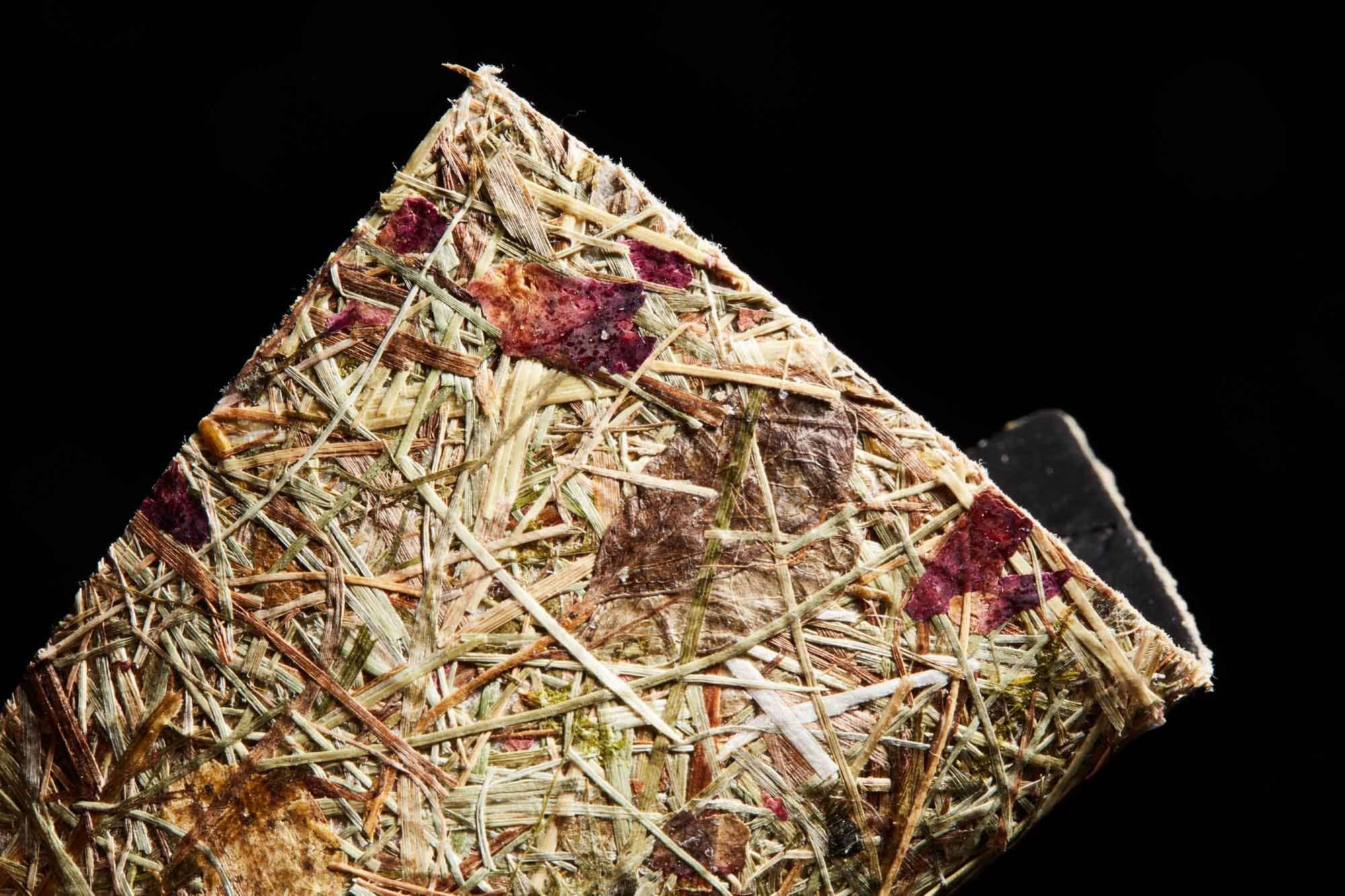
Another area of potential for sensitive environments is the power of a textural wall material. This innovative solution utilizes natural hay fibers and plant material that are bound together using water-based, environmentally friendly binders harvested regionally in Europe. Unlike conventional wall panels finished in wood veneer or flat color, this surface is entirely natural, with visible structure, variation, and depth making every panel unique. The scent of natural hay has a positive effect on environments and adds a sensory boost that stimulates feelings of calm and focus. This natural material creates a pleasant spatial atmosphere, enhances well-being, and contributes to the preservation of inner-alpine highland meadows, bringing one closer to nature. Its texture, and sound-absorbing structure together create a calmer, more harmonious indoor environment.

The final material offers a sustainable answer to our perception of touch when sitting or used as padding for protection in furniture.
This padding solution is an alternative to traditional foam, providing the same comfort and performance, except it is cultivated from kelp rather than drawn from the earth’s oil. The primary component of this foam is Norwegian kelp and minerals derived from seashells. These components are mixed to create a paste and then channeled into an expansion process through water injection and air foaming. This process gives the foam a porous structure, which contributes to the elasticity and lightness of the finished product. Currently, the biofoam is manually produced through an artisanal process that creates batches in rolls. It can also be customized into specific sizes and forms, or cut into shapes. This sustainable material is a mindful and innovative approach for sensitive environments where furniture upholstery, mattresses, packaging and textiles are used.