pixel
Skip links

Rethinking Surplus Stock in Fashion and Textiles

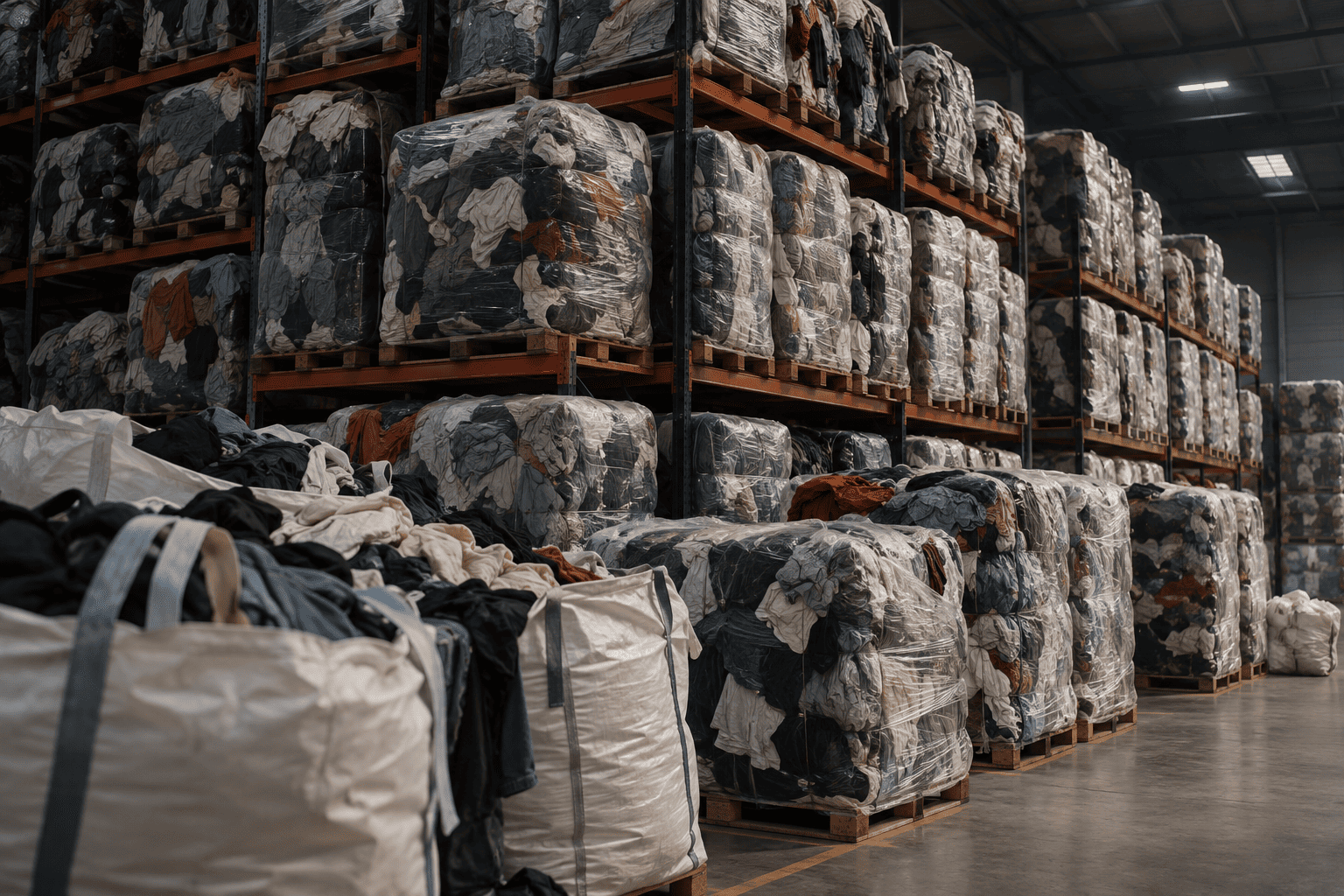
Every season, the fashion and textile industry faces the same problem: what to do with the products that never reach a customer. For years, destroying overstock was a quick and quiet answer. However, since July of this year it is no longer one for large companies, as the EU ban on destroying unsold apparel, clothing accessories and footwear has begun to apply.

This regulation questions if destruction is off the table, what else can you do with surplus garments, leftover fabrics and production waste from the fashion and textile industries? The answers reach beyond resale and donation and instead analyze material choices, construction and end of life. These areas investigate if a product eventually becomes a burden or a resource throughout the production cycle. In this article, we look at how companies are turning unsold stock into an opportunity, and why the best solution to surplus often begins during the design stage.

From Unsold Garments to Raw Materials

Image courtesy of Losanje

An innovative industrial venture in France shows what happens when upcycling is built into an industrial process, transforming used or unsold garments into new products for brands. Concerns about cost and speed are countered by an automated cutting line that reduces production time per piece by 70%, while partners across Europe handle mass production. Having already processed over 340 tonnes of textiles, it suggests that the end of destruction can be an opportunity rather than a dead end in a product’s life. Unsold stock can become raw material for new collections, and designing with it begins to reshape how products are conceived at the earliest stage of textile and fashion production.

Upcycling Surplus Stock Through Design

Marco D’Antuono, Lorenza De Monte, Bartolomeo Gentile, Tullio Iandolo, Serena Polverino; Prototype shooting for the collection “Textile Soul: Storie di fili eterni”; Photography by Giovanni De Blasio.

In a recent university design project, about seventy student teams were challenged to transform six hundred unsold garments into new shirts, trousers, and accessories, working alongside a social tailoring enterprise that specializes in upcycling and repair. Traditional, handcrafted artisanal techniques were used for re-dyeing and finishing, elevating the reconstruction of each piece. By combining surplus stock, student creativity and technical and social expertise, the project shows that surplus can become a resource and points to textile innovation that reinvents what already exists.

Technology for the Reuse of Unsold Garments

A third approach comes from a Milan laboratory exploring how technology can enable the reuse of unsold garments. The project utilized thermowelding techniques to customize surplus clothing and planned each modification digitally, previewing variations on screen before any garment was touched. The end result was four trench coats that each represented a different customization package and a new form of reuse. Beyond the garments themselves, it points to a more conscious way of producing, in which technology and craftsmanship work together to give unsold stock new value.

Image courtesy of D-house laboratorio urbano

As we look to the future, the end of destruction can be seen less as a limit than as an invitation to rethink how fashion is made and what happens to it afterwards. The same logic applies to reuse, recycling and end-of-life planning: the earlier they enter the design process, the less there is to recover or discard later. For brands, the question is no longer only what to do with what is left, but how to design products that are ready for more than one life.

From Circular Ideas to Concrete Solutions

Turning these ideas into concrete solutions is the focus of In4Sustain Industry Piloting, a free programme we are hosting at Materially in Milan from October. Over five sessions between October and December 2026, professionals from the textile and fashion sector combine remote learning, hands-on workshops and design thinking to develop tangible proposals on sustainability and the circular economy.

Want to see how these ideas evolve into concrete solutions? Follow the In4Sustain project and stay updated on the next activities, results and stories from the textile and fashion sector.