
From materials to the built environment. Materially’s contributions to educational projects.
In the first part of 2026, Materially has contributed in several ways to meetings and educational projects aimed at young people, as well as professionals and industry experts. Among these, public events such as the webinar on bio-based materials organized by FLA and Spring Cluster, and the jury of the Avant-Garde Award at Packaging Première, were opportunities where Materially, represented by Anna Pellizzari, shared its expertise in sustainability and material innovation for product design across two sectors of major importance to the Italian economy.
Less visible, but equally significant, are the activities carried out within two longer-term educational experiences: the European project UP-2-NEB and the Architecture CO2=0 master’s program coordinated by Professor Raffaella Laezza at IUAV.
UP2NEB
UP2NEB is an Erasmus+ project that develops a training pathway for youth workers and young people through co-design tools and participatory methodologies inspired by the values of the New European Bauhaus (NEB).
The NEB is an initiative of the European Commission that promotes the transformation of living spaces according to three principles: sustainability, inclusion, and beauty. Its goal is to develop innovative solutions that improve the quality of life in cities and communities through participatory and interdisciplinary processes.
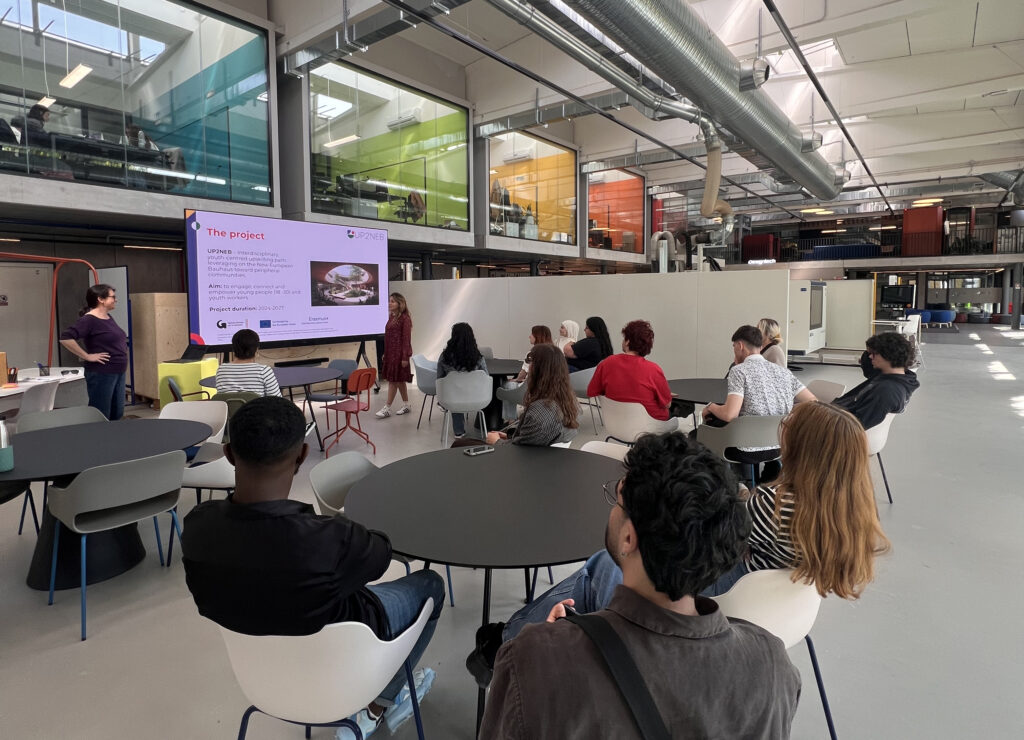
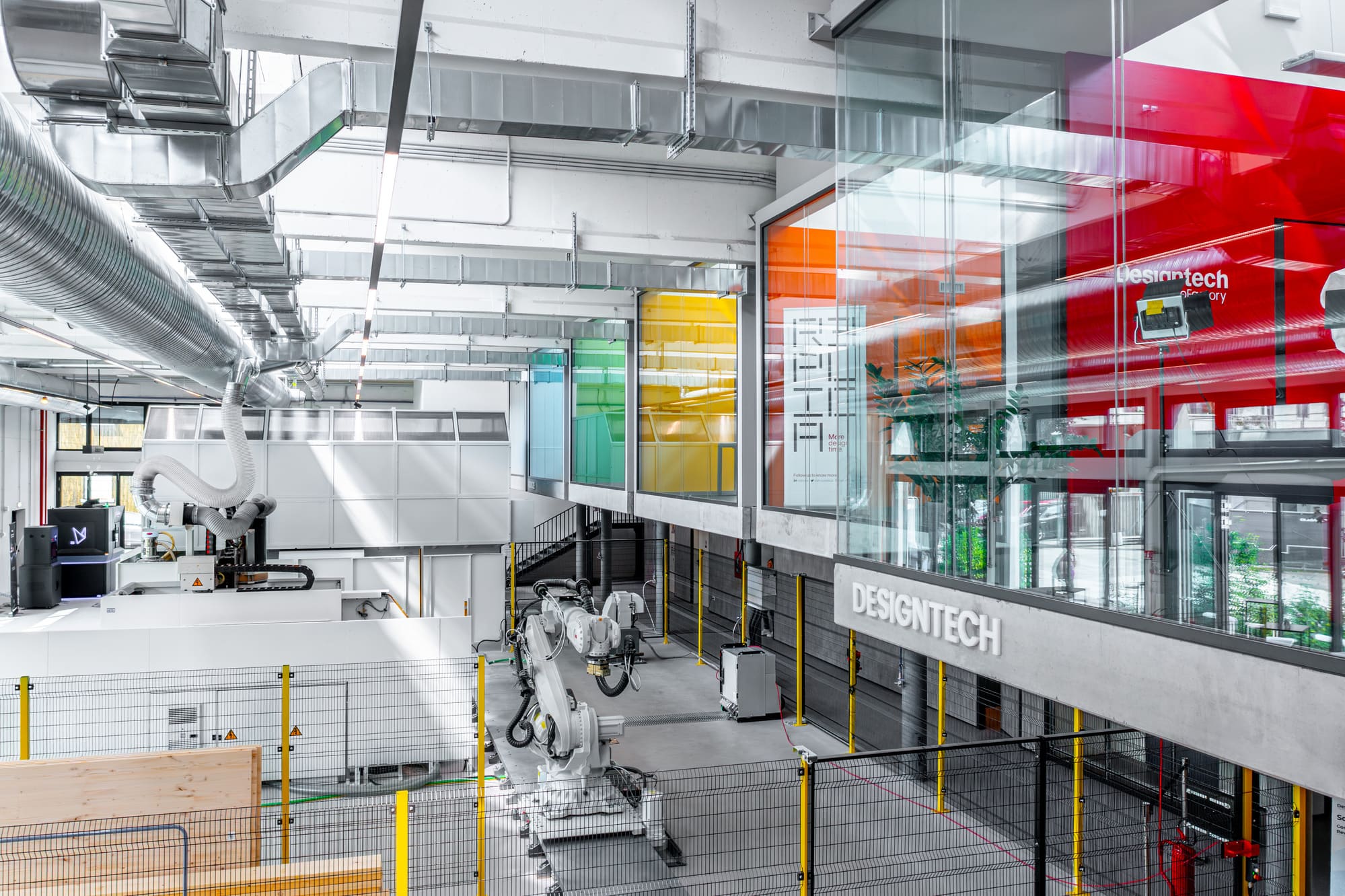
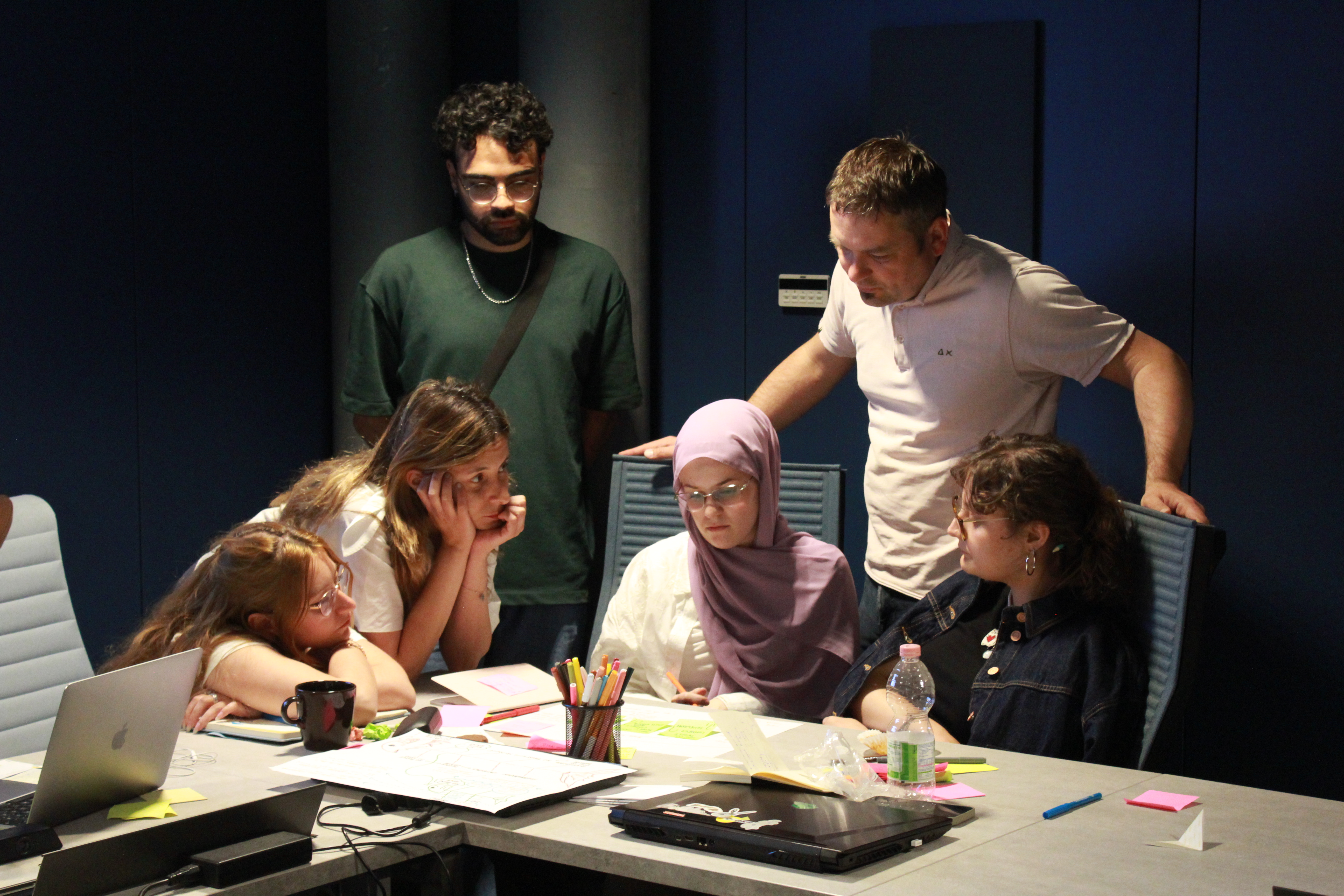
From May 17 to 23, 2026, at Materially (in collaboration with project partners CIAPE and STEP), we hosted a week of international mobility dedicated to the theme “Prioritising the places and people that need it the most.” The week was structured around a design thinking methodology articulated through progressive phases: from discovering and understanding real needs (through observations and interviews), to defining challenges, generating ideas, developing concepts, and creating prototypes. Particular attention was given to working within real contexts and making use of local resources, with an approach focused on transforming problems into design opportunities, also through material experimentation.

Among the carried out activities, a tour of the Bovisa district was also organized, led by a guide from the BAU Museum (Bovisa Arte Urbana). During the week, several external guests were also involved, including the Politecnico di Milano research group “Materials Design Practices for Transition” (MaDe/Trans), helping to enrich the dialogue between research, local communities, and design practices. The week ended with a public presentation during which the outcomes of the work developed were shared. Representatives from the Municipality of Milan and several local companies were invited to the event, creating an opportunity for discussion and exchange among participants, local institutions and organisations on the issues addressed and the solutions developed.

Architecture CO2=0
With its title, the Architecture Carbon Zero master’s program was created with the aim of helping to bridge a gap that is increasingly evident in the world of design: the gap between environmental awareness and the concrete tools needed to translate this sensitivity into implementable practices. This need is particularly felt among architects who seek to reduce the environmental impact of their work, approaching the ecological transition not as an abstract principle, but as a genuine design methodology.

This highly relevant yet complex topic is addressed through a twelve-month educational program that takes place between Venice, at the Università Iuav di Venezia, New York, at the New York Institute of Technology, and the offices of professional studios and companies hosting participants for hands-on internship experiences. The program offers an international and multidisciplinary education designed to connect research, design, and practical application.
Among the educational modules of the program, Material Balance explores the role of materials within a carbon-zero-oriented design approach. Curated by Daniela Amandolese – collaborator at Materially and PhD candidate in the National Doctorate in Design – the module focuses on materials and strategies capable of contributing to the reduction of architecture’s environmental footprint. Over the course of four lectures, complemented by a fifth in-depth session hosted at Materially, participants explored the potential of bio-based materials, living materials, and design applications related to the use of waste and by-products, with a specific focus on carbon-zero strategies. The program addressed topics such as the selection of local and sustainable materials, the activation of virtuous supply chains based on the principles of reduce, reuse, repair, and recycle, the adaptation of material choices to geographical and production contexts, and the analysis of low-emission materials.

The aim of the module is to provide participants with practical tools and evaluation criteria applicable to the nine renovation and new construction projects on which the master’s students are working, helping them integrate environmental, technical, and territorial aspects into their design decisions.
A particularly meaningful moment of exchange took place on May 19 during the visit to Materially, providing an opportunity to engage directly with materials and application-oriented approaches, transforming the topics explored in the classroom into a tangible experience of exploration and dialogue between research and applied research.