
When Temperature Becomes Visible: Thermochromic Materials and New Design Possibilities
In the 1990s, we came to know them through mood rings and Hypercolor T-shirts, which shifted hues in response to body heat.
Thermochromic materials, part of the smart materials family, change color in response to temperature, either reversibly or irreversibly. They rely on two main technologies: thermotropic liquid crystals and microencapsulated leuco dyes. The former reflect different wavelengths of light as heat alters their molecular orientation. The latter, more widely used in industrial and textile applications, react through an acid activator and a low-melting-point solvent: below the activation threshold, the compound remains colored; above it, the solvent melts and the system becomes transparent, revealing the color of the underlying substrate.
Today, these technologies have moved beyond their purely playful phase, finding their full expression in enhancing the interactive experience between object and user, while simultaneously promoting sustainability, passive thermoregulation, and new safety standards.
Dynamic Aesthetics and User Interaction

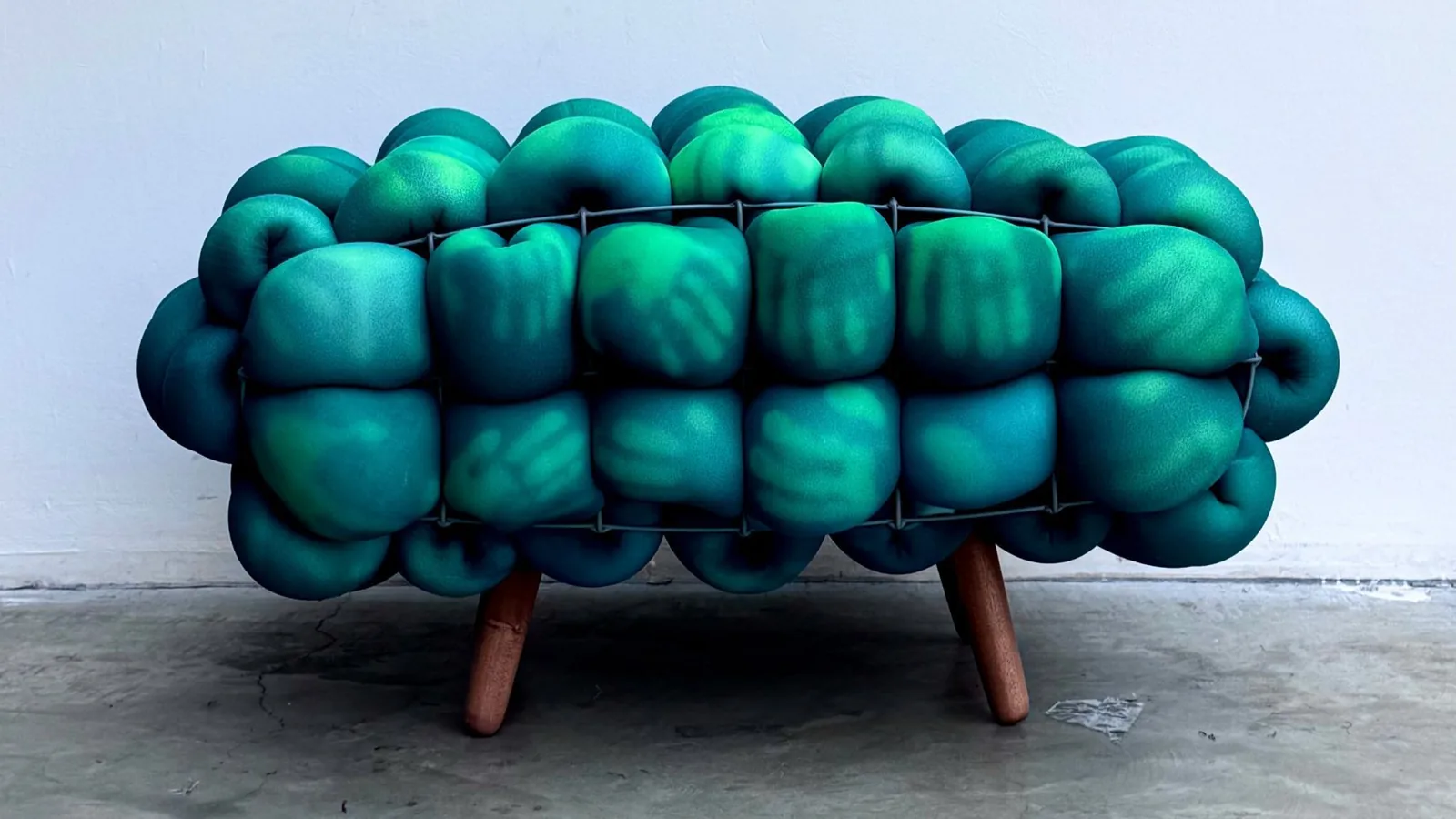
In furniture and interior design, color becomes a tool for tactile and emotional interaction with the user. To celebrate the fiftieth anniversary of Italian sofa manufacturer DiTre Italia, Milan Design Week 2026 hosted Retro-Evolution, an installation by Daniele Moscheri exploring the history of the sofa and its relationship with those who use it. Materially supported the project by scouting and selecting the thermochromic pigment manufacturers and textile printers involved.
The most compelling feature is the way the title appears directly on the upholstery. A filtering opalescent film applied to the storefront window allows sunlight to pass solely through specific linear cutouts and the letters of the title, projecting them onto the thermochromic fabric. Wherever the light hits, the fabric shifts color and the title is temporarily “printed” onto the sofa, meaning the visual outcome depends entirely on the natural light of that specific moment. The fabric also reacts to direct contact: in the project’s photographic tests, the warmth of a hand leaves a visible chromatic imprint on the weave.
This case demonstrates an application of thermochromism that goes beyond mere decoration: the material carries the narrative, and anyone who sits on or touches the sofa becomes part of the installation. The flip side is its dependence on environmental conditions. Light, window orientation, and ambient temperature all affect the outcome, requiring project-specific calibration for every installation.
Sustainability and Passive Building Thermoregulation

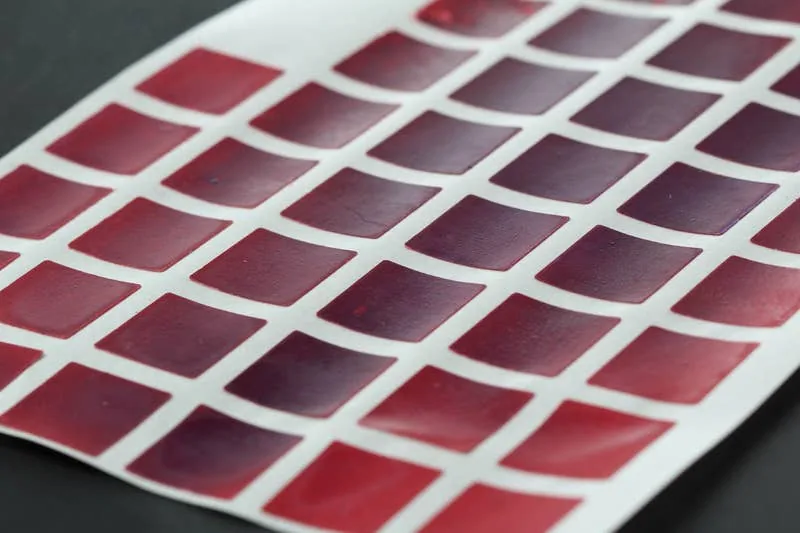
Moving to an architectural scale, responsive materials represent a new frontier in energy efficiency and sustainability. Thermochromism can also act directly on the building envelope. An American designer has developed a climate-responsive paint that appears dark below 25 °C (77 °F) and lightens until it becomes nearly white above this threshold.
Unlike traditional reflective coatings, which continue to deflect solar radiation even during colder months, this formulation adapts its solar absorption to outdoor conditions: a dark facade absorbs heat in winter, while a light one reflects it in summer, reducing both heating and cooling demands and helping mitigate the urban heat island effect. According to the designer’s estimates, annual energy savings could range between 20% and 30%.
Safety and Immediate Visual Diagnostics

When it comes to health and risk prevention, these applications turn into passive monitoring tools that are as simple as they are effective. A color shift calibrated to a precise thermal threshold provides an immediate visual indicator, requiring no electronic sensors or batteries. The most established consumer application is infant tableware, where polymers compounded with thermochromic masterbatches change color above 37 °C (98.6 °F) to warn against the risk of burns.
The same principle is deployed in food and pharmaceutical smart packaging, where irreversible thermochromic inks are printed directly onto labels to verify cold chain integrity: even a temporary breach of the critical temperature triggers a permanent color shift, alerting handlers and consumers to potential product spoilage. In industrial settings, thermochromic coatings applied to pipes, valves, and joints allow operators to detect overheating or insulation failures during routine inspections, streamlining predictive maintenance.
Are you developing a new product or looking for responsive, functional material solutions? Materially supports companies in scouting and selecting innovative, smart, and high-performance materials tailored to specific projects and applications.
(Cover image courtesy of Jacobwallsstudio)