Biocomposites and circular fibers: sustainable alternatives for design and industry
When discussing composite materials, we usually refer to high-performance solutions made of a matrix and a reinforcement of synthetic origin, such as carbon fibers or aramid fibers, used in sectors where strength and performance are essential requirements. However, traditional composites present significant sustainability challenges: the synthetic nature of their components, which are often difficult to separate, make recycling processes complex and costly, while the matrices used are predominantly derived from fossil-based sources, further increasing their environmental impact.
Considering also the growing environmental burden associated with the use of virgin materials, traditional composites have undergone extensive reconsideration aimed at identifying more sustainable and easily disposable alternatives capable of facilitating material degradation at the end of their life cycle. From this need, bio-composites have emerged, produced through the use of renewable bio-based resources or pre- and post-consumer waste materials. Among the most promising solutions are bio-composites made from recycled circular fibers, which not only allow the recovery of materials otherwise destined for disposal, but also transform waste into a high value-added resource.
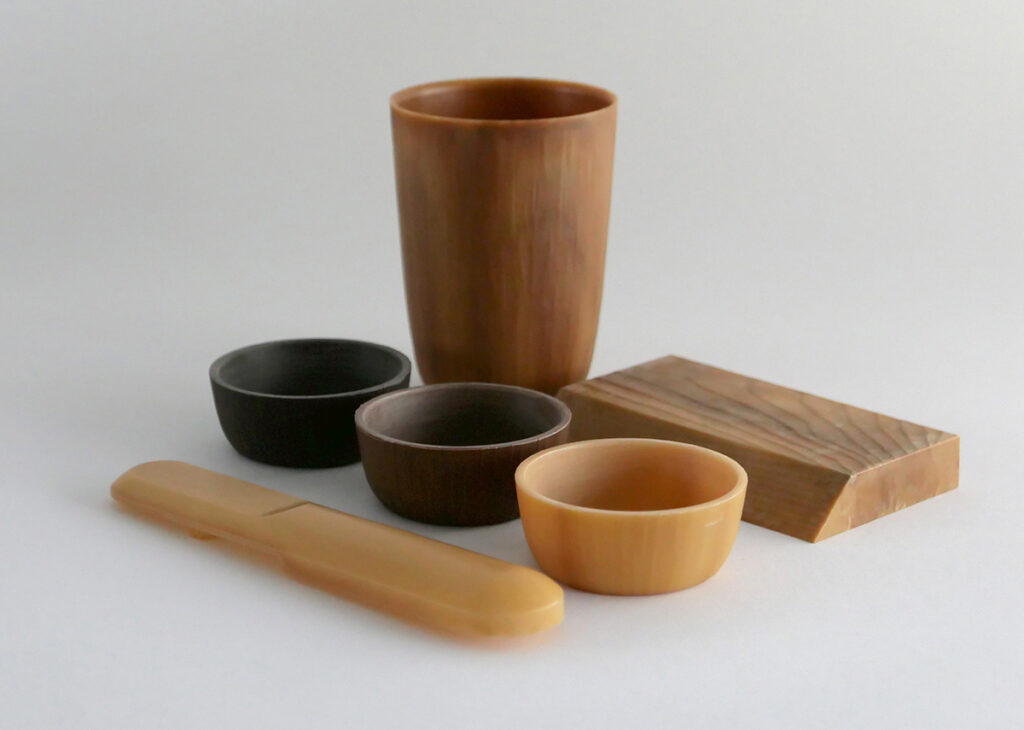
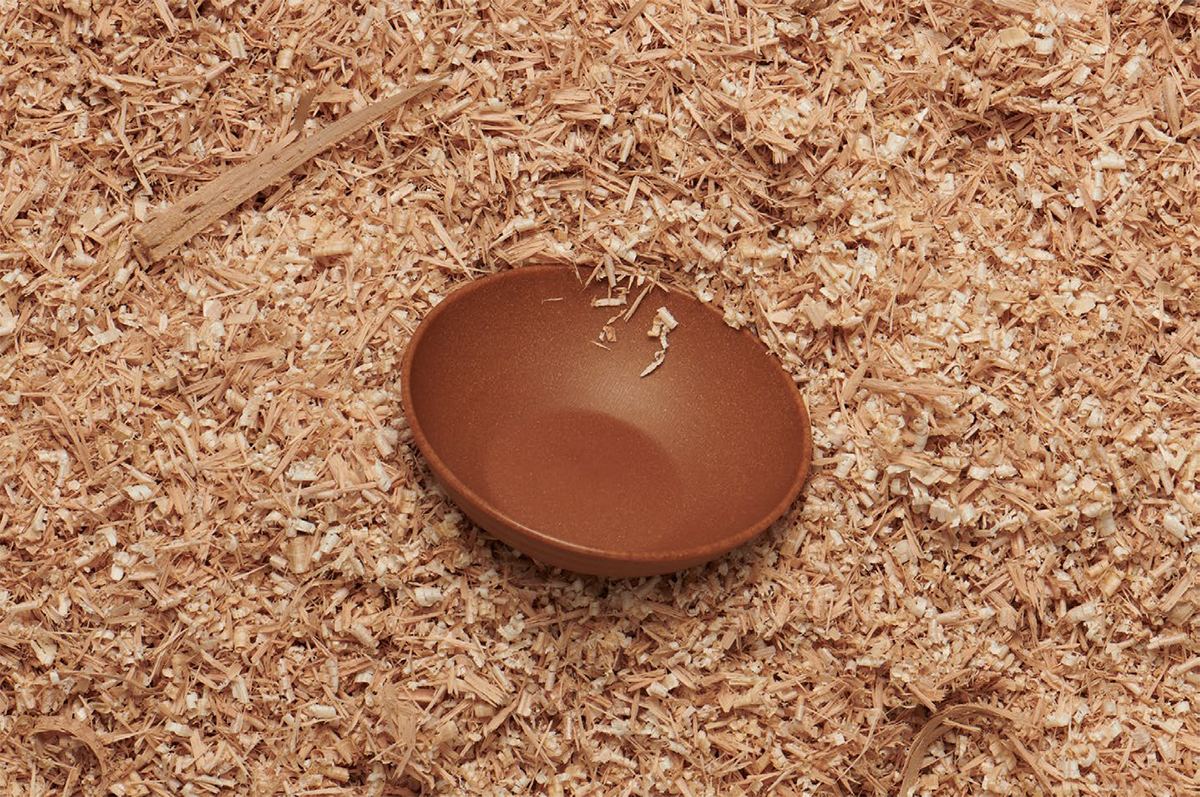
Among the most interesting solutions there’s kinari, a material developed by Panasonic Holdings Corporation. It is a bio-composite created by dispersing cellulose fibers within a bio-based resin and designed to deliver high performance while reducing environmental impact. Traditionally, the production of cellulose fibers involves dissolving cellulose pulp in water followed by a drying process, which requires large amounts of energy and water resources. This challenge has been overcome through an innovative entirely dry manufacturing process that enables the production of bio-composites containing up to 85% cellulose fiber, fully biodegradable in seawater in approximately nine months.
In addition to cellulose, kinari also incorporates waste materials from other industrial supply chains used as reinforcing fibers, including wood from forest thinning, seaweed, coffee grounds, recycled paper, and post-consumer textiles. The variety of raw materials employed allows for the creation of bio-composites with different textures and color variations, expanding both their functional and aesthetic applications. At the same time, the company is developing an internal recovery and recycling system for the material at the end of its life cycle, with the aim of reintroducing it into the production process for new products. Through kinari, Panasonic Holdings Corporation aims to progressively replace the rigid plastic components traditionally used in home appliances and household accessories, offering a significantly more sustainable high-performance alternative.

Another company that has built its path around the development of functional bio-composites is the Swedish PaperShell, which has developed an innovative material for creating rigid, durable, and low-carbon panels.
By combining pre-consumer kraft paper with a natural binder, the company has created a high-performance material capable of replacing conventional materials in the furniture and building sectors. Through an automated high-temperature pressure molding process, the material can take on rigid and curved forms while maintaining a high strength-to-weight ratio.
Lightweight, durable, and compatible with scalable manufacturing processes, it represents an alternative to materials such as plastic, aluminum, fiberglass, and sheet metal, contributing to the reduction of emissions. The material’s end-of-life phase also follows a circular logic: through controlled processes, PaperShell can be transformed into biochar capable of enriching the soil and storing carbon, thus supporting a cycle based on resource recovery and regeneration.

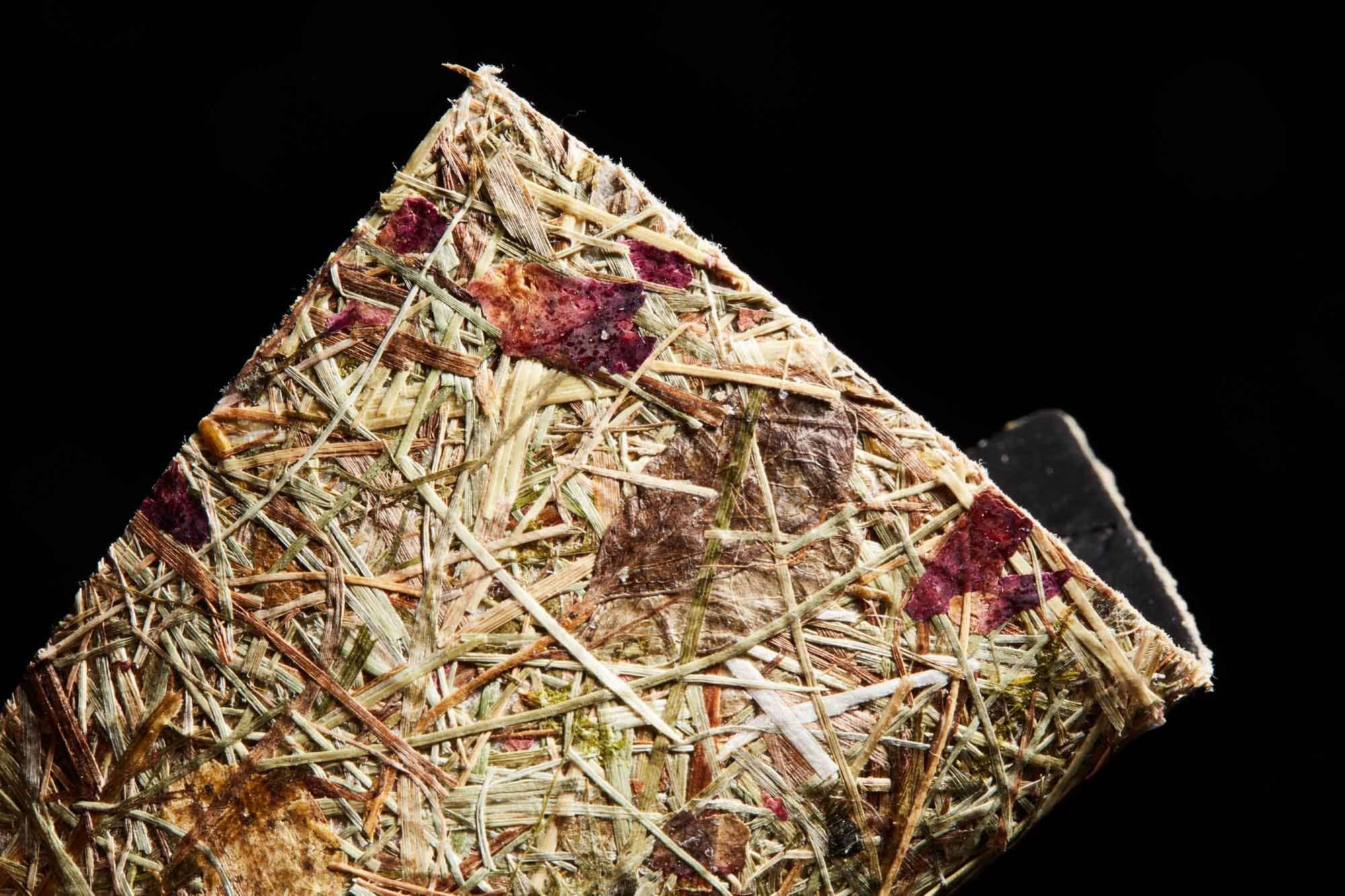
Another example is a bio-composite created through the recovery of agricultural waste such as grass, leaves, malt residues, and coffee pulp, transformed into functional materials suitable for a variety of interior applications. The material composition ranges from 15% to 50% plant-based bioresin – 20% of which is derived from cactus cellulose – and from 50% to 85% waste fibers. No additives or colorants are included in the formulation, and the process avoids the use of harmful chemicals during both waste treatment and cleaning, making the material safe for both the environment and the end user.
In the first stage of the production process, the waste materials are cleaned and oven-dried, then shredded and sieved. The material is subsequently pressed into sheets and dried again while, in the final stage, it is burnished, sanded, or polished depending on the intended application. The result is a durable, lightweight, and high-quality material characterized by sound-absorbing properties, a soft felt-like surface, and a natural tactile feel. These qualities make it particularly suitable for interior applications such as wall coverings and partition panels, contributing to healthier indoor environments. At the end of its life cycle, the material is fully biodegradable and leaves no residue in the environment.
Are you developing a new product or looking for more sustainable alternatives to traditional materials? Materially supports companies in identifying bio-based, circular, and high-performance materials for new projects and applications.