Designing to disappear: how biodegradability is becoming the new asset in sustainable design
In a period marked by growing environmental concerns, the most innovative designs are those conceived to leave no trace at the end of their life cycle. These “designed-to-disappear” materials are gradually entering everyday life through products that offer performances equal to, if not better than, those made with conventional materials.
Within this new perspective, biodegradability is no longer seen as a limitation but as a fundamental aspect of design – an approach that embraces the principle of returning materials to the earth. Today, designing biodegradable products is essential to address the overwhelming accumulation of waste in landfills and oceans, reduce dependence on fossil-fuel-based plastics, and lower carbon emissions. It also supports a circular economy, enabling materials to safely reintegrate into natural systems.
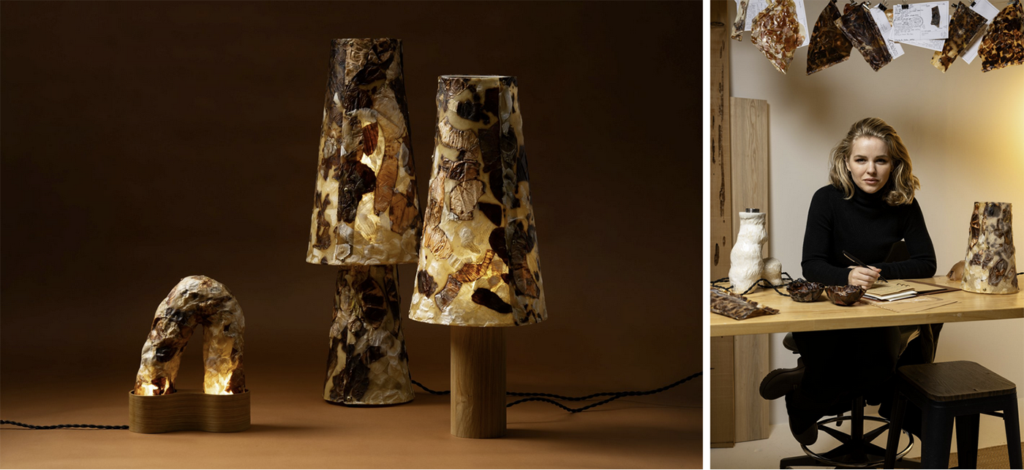
An example of this approach are the Circular Skin lampshades, created from culinary waste. Developed by the Chicago-based Studio Kloak, led by Professor of the University of Illinois Urbana–Champaign CoCo Ree Lemary, the project introduces a high-performance, biodegradable polymer derived from one of the world’s most common food byproducts: onion skins. Presented in collaboration with Materially during Milan Design Week 2026, the work explores the material’s distinctive organic translucency through a series of light-oriented prototypes, bridging the gap between culinary waste and sculptural design.
The material preserves the natural fiber structure and tonal variations of onion skins, resulting in a surface that is both visually rich and structurally suitable for lighting applications. Entirely produced in-house through a DIY process that avoids toxic or harmful chemicals, it makes use of agricultural byproducts typically discarded at both domestic and industrial levels. Through a proprietary method of layering, binding, and drying, the material becomes fully biodegradable.
Lightweight, translucent, and highly adaptable, it can be shaped into sculptural lampshades. By transforming a humble food byproduct into a functional lighting material, the project redefines waste as a valuable resource and encourages a critical reflection on the traditionally extractive materials used in lighting, such as alabaster or stalactite stone.

Another key reason to shift toward designing objects made from biodegradable materials lies not only in waste reduction, but also in health and environmental safety. Unlike conventional plastics, specific types of bioplastics do not release harmful chemicals into water or into our bodies.
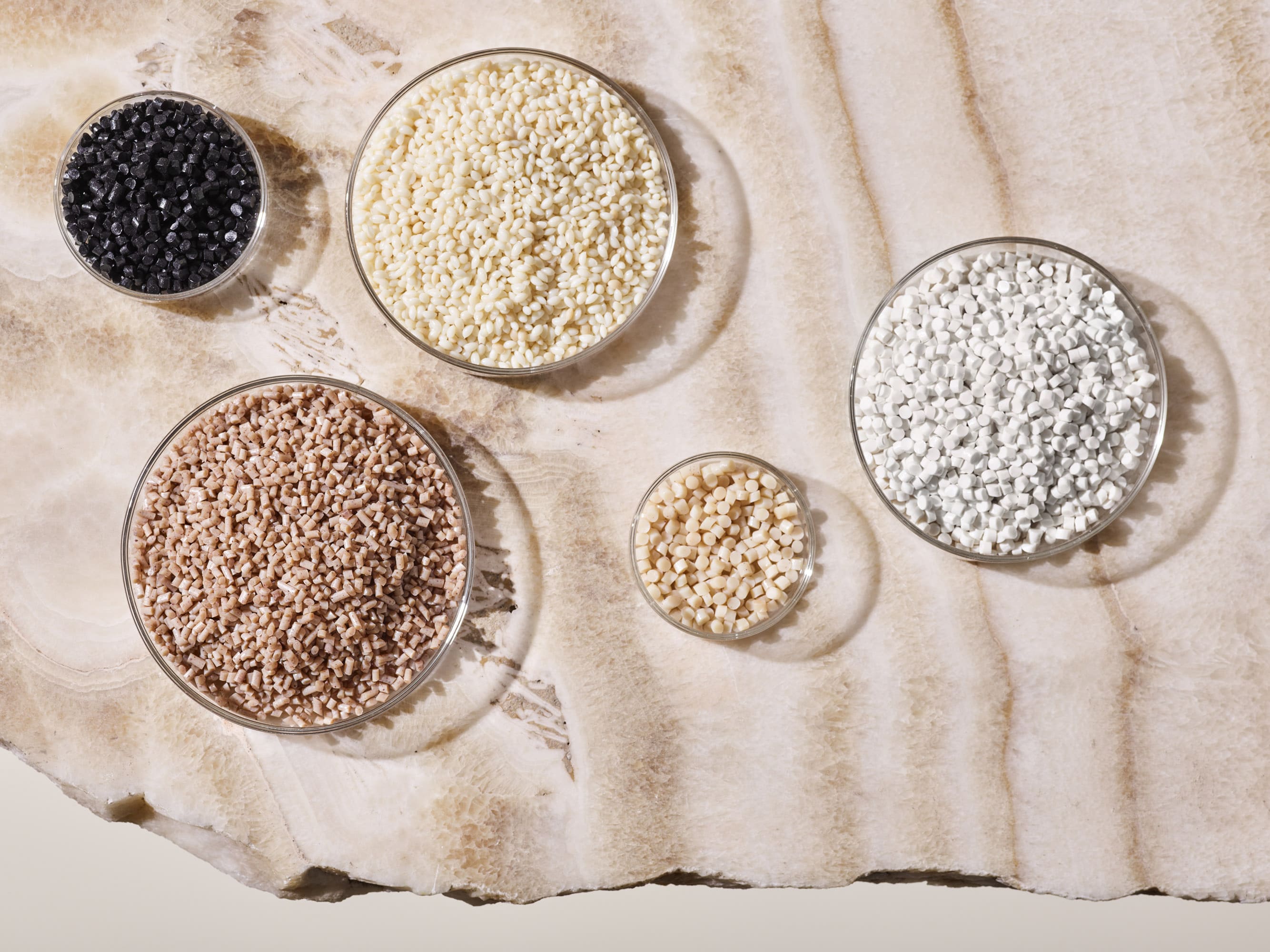
In this context, Balena, a startup founded in 2020, is redefining the fashion and lifestyle sector by replacing traditional plastics with BioCir®, a family of advanced bio-based thermoplastic materials. Engineered from high-molecular-weight biodegradable polymers and renewable feedstocks, BioCir® is designed to avoid the problem of releasing microplastics into both the humans, animals and the environment.
The BioCir® range includes BioCir® Flex, BioCir® Flex3D, BioCir® X, and BioCir® Foam, each developed to deliver real-world performance, safer chemical composition, and clearly defined end-of-life pathways, while remaining fully compatible with standard industrial processing methods. Derived from renewable resources such as castor beans, natural oils, and polysaccharides, these materials are designed to maximize bio-based content without compromising performance or scalability.
Unlike conventional plastics, which can persist in the environment for centuries, BioCir® materials can be metabolized by microorganisms into harmless substances across different environments, significantly reducing the long-term accumulation of microplastics.