Three advanced materials for high-end watchmaking
Sustainability, performance, and transparency are no longer separate topics in the watchmaking industry; today they converge in the use of more durable, high-performance materials, influencing design and production processes.
Advanced materials in contemporary watchmaking aim to improve durability, reduce weight, and introduce innovative aesthetics, thanks to the use of composites and metals developed with cutting-edge technologies.
The advisory team at Materially, which supports companies in the search for innovative and sustainable materials, has selected three advanced materials for high-end watchmaking from the Material ConneXion database.
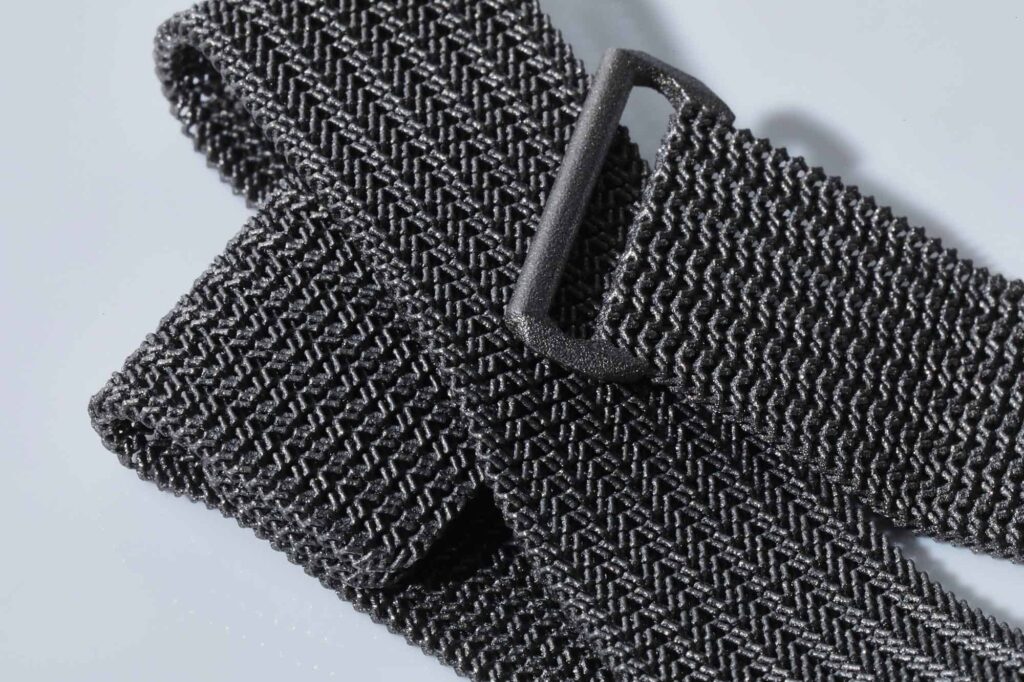
This watch strap is made from a titanium alloy using 3D printing. Additive manufacturing allows the creation of a complex interwoven link structure that is both stronger and lighter than what traditional methods can achieve.
Unlike conventional techniques, 3D printing enables the production of links of any configuration or weave pattern, using less material and streamlining the manufacturing process. In this case, the strap consists of approximately 4,000 interlaced links, produced through LPBF (Laser Powder Bed Fusion), a high-precision additive manufacturing process that uses a fiber laser to selectively fuse thin layers of metal powder.
This approach also allows for on-demand production, making the technology particularly well-suited for applications in jewelry and fashion accessories.

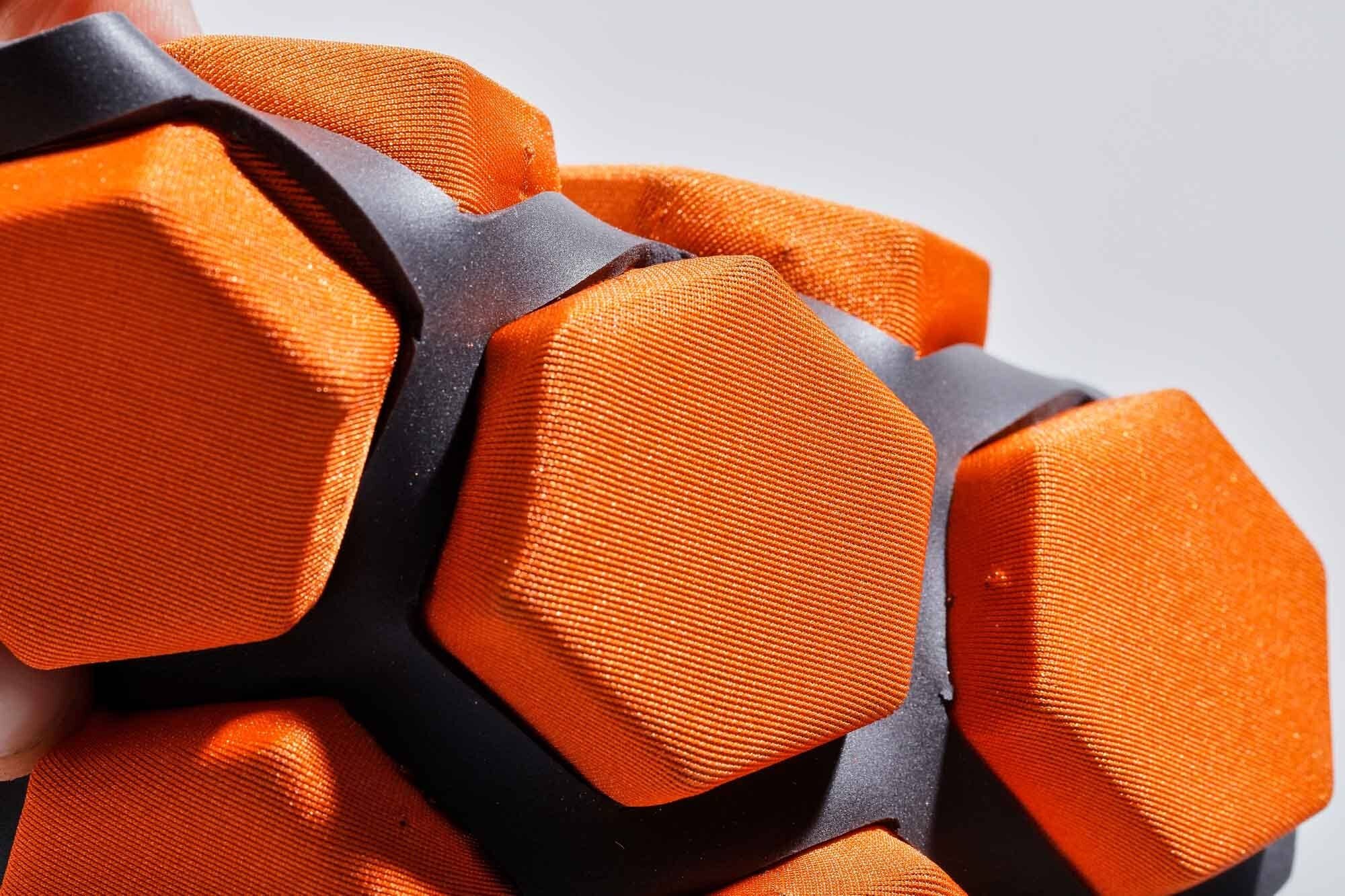
This nanocomposite coating combines metallic and diamond-based components, achieving high levels of hardness and abrasion resistance. In this way, it offers a more economical and environmentally friendly alternative to traditional chromium coatings, while providing significantly enhanced protection against scratches and corrosion.
The thin film is deposited onto the substrate through Physical Vapor Deposition (PVD) and Plasma-Enhanced Chemical Vapor Deposition (PECVD) processes, followed by post-polymerization to achieve a durable, finely finished surface.
Thanks to its properties, this nanocoating finds applications not only in watchmaking and accessories but also in high-performance sectors such as automotive and aerospace.

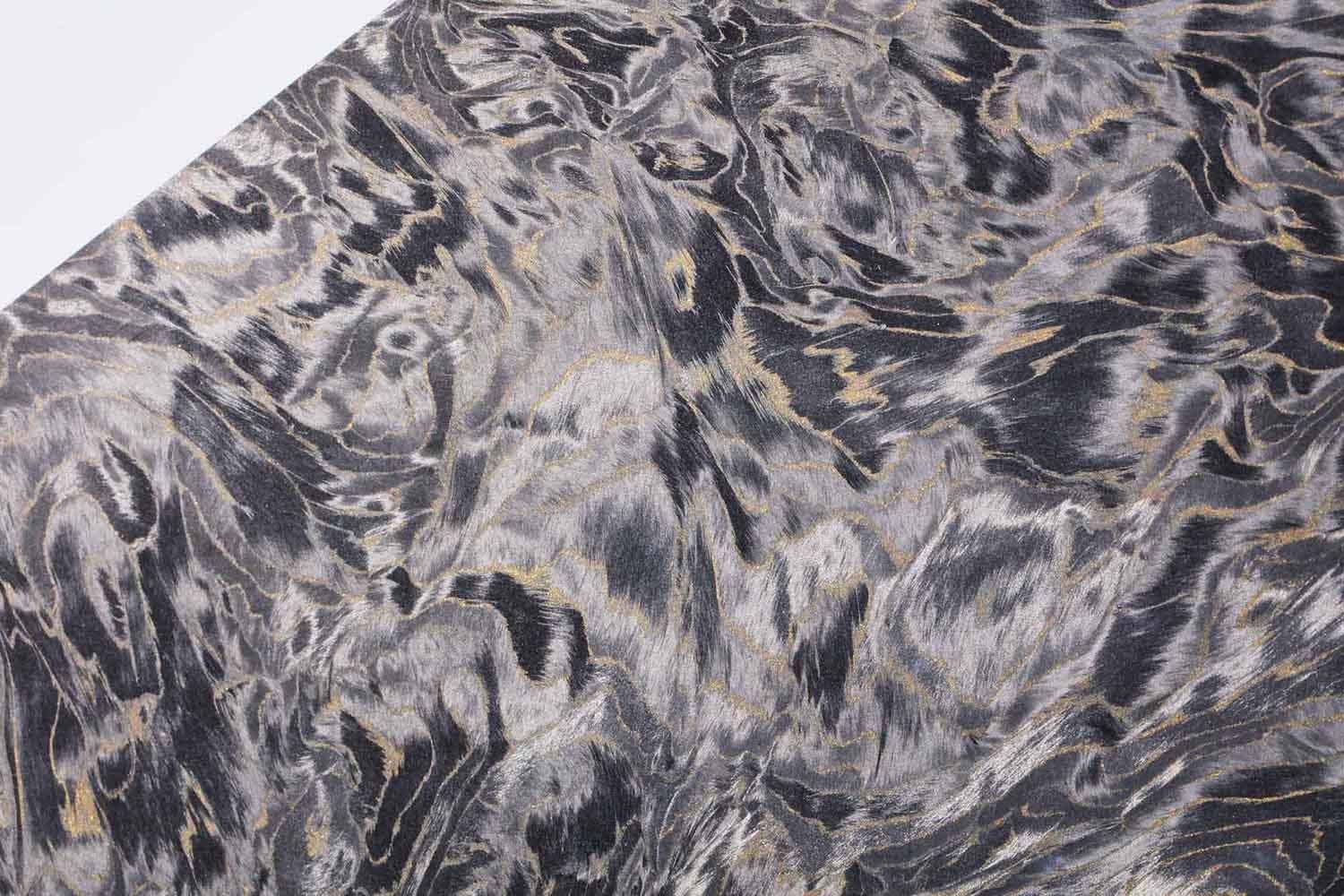
This material is made from recycled carbon fiber and provides structural properties comparable to those required in the aerospace sector. It is produced entirely from prepreg materials sourced from the aerospace supply chain — specifically from next-generation civil aircraft components — and consists of 66% carbon fiber and 34% high-temperature reinforced epoxy resin.
The patented manufacturing process allows the production of components with complex geometries while maintaining high structural performance. The high carbon fiber content makes the material particularly suited to bear heavy loads and absorb impact energy.
According to an LCA (Life Cycle Assessment), its environmental impact is significantly reduced, saving approximately 13 kg of CO₂ emissions for every kilogram of material produced, making it suitable for applications in watchmaking, accessories as well as interior design panels.
Discover the Materials Insights subscription by Material ConneXion: thousands of content pieces and trend reports on innovative materials, plus access to a database featuring over 10,000 sustainable and innovative materials you can explore for your projects.